

OpenAI launches ChatGPT Work for workplace automation
Fri, 10th Jul 2026
OpenAI has launched ChatGPT Work, a new agent in ChatGPT for task-based workplace automation, alongside GPT-5.6 and an updated desktop app.
The product is designed to let users assign longer, multi-step tasks to ChatGPT across web, mobile and desktop. It can produce documents, spreadsheets, slide decks and web apps using information gathered from connected workplace tools.
ChatGPT Work can remain active on projects for hours, breaking work into smaller stages and completing them independently while users monitor progress, answer questions, change direction and approve key actions.
The launch expands OpenAI's effort to turn ChatGPT from a conversational assistant into a workplace execution tool. Codex technology is built into the product. OpenAI said more than 5 million people use Codex each week, including more than 1 million who use it for work beyond software development.
GPT-5.6, introduced alongside the service, underpins the new system. OpenAI said the model is intended to handle multi-step reasoning and produce materials that follow templates and reference files supplied by users.
Rollout plans
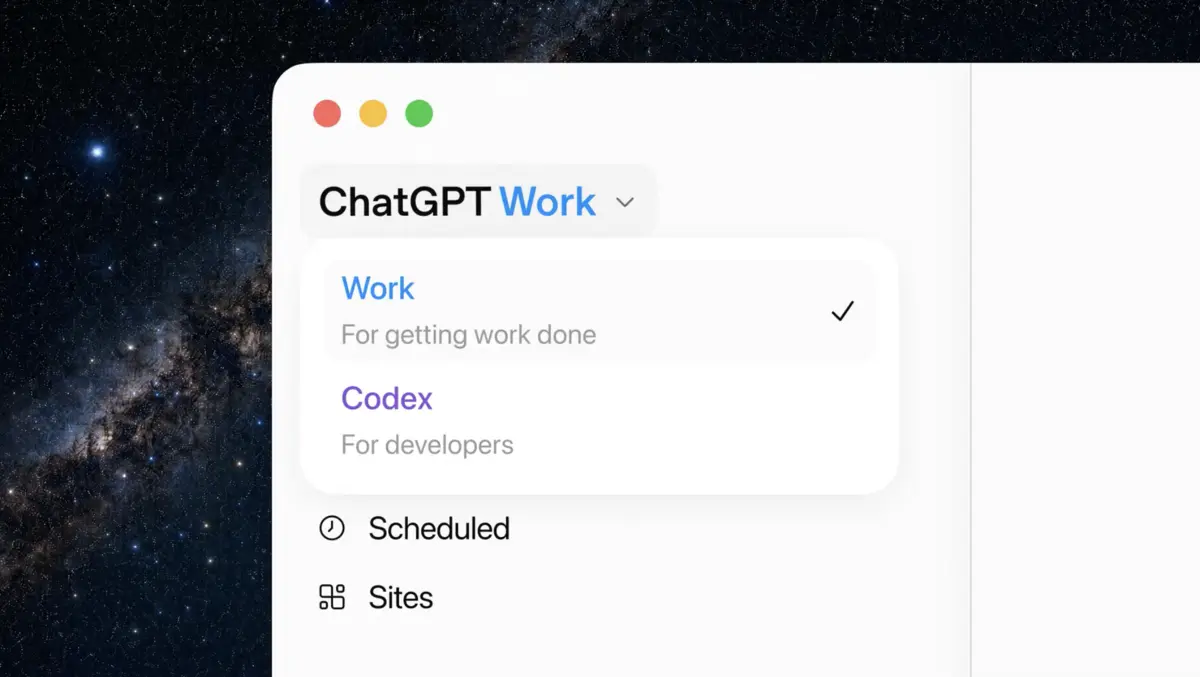
On web and mobile, ChatGPT Work is rolling out first to Pro, Enterprise and Edu users, with Plus and Business users set to receive access shortly after. On desktop, Chat, Work and Codex are now available across all plans, including Free, through the ChatGPT app for Windows and Mac.
As part of the change, the standalone Codex app is being folded into the new ChatGPT desktop app. Codex will continue to serve developers and technical users, with additions including inline editing within diffs, side-panel pull request review, support for multiple repositories in one project and faster computer-based task execution.
The existing ChatGPT desktop app will be renamed ChatGPT Classic.
Connected tools
ChatGPT Work relies on plugins to connect with workplace systems including Slack, Microsoft Teams, Google Drive, SharePoint, email, calendars, customer relationship management software, project trackers and other internal tools. The service can decide when to reference a plugin based on a prompt's wording, or users can specify a source directly.
A unified plugins directory has also been added, bringing these integrations together in one place and allowing the system to suggest relevant tools during a conversation.
Once connected, the software can gather information from several sources, create drafts and analyses, and continue refining material in the background. Users can still decide what the service can access, when it checks in and when approval is required before actions are taken.
OpenAI is also introducing Sites in ChatGPT in public beta. The feature lets users turn work into an interactive site or web app for internal or public sharing, including dashboards, trackers, prototypes, portals and reports.
Scheduled tasks
A central feature is Scheduled Tasks, which lets users ask ChatGPT Work to perform one-off actions, repeat them on a timetable, respond to trigger events or monitor changes over time. OpenAI said the system can use connected apps and its browser to review Slack updates, refresh meeting agendas, check websites and dashboards, summarise changes, monitor customer feedback and update presentations as new information arrives.
On desktop, the service now includes a built-in browser that can gather information online, use web-based tools and open files from Google Workspace and Microsoft 365 inside the app. OpenAI also said a Computer Use function can carry out actions on a user's machine, including clicking, typing and moving files across apps, tools and browsers.
OpenAI is also updating its Chrome extension so users can access ChatGPT directly from Chrome's sidebar. It added that it will begin sunsetting the standalone Atlas browser, which informed some of the new browser-based functions.
Internal and customer use
OpenAI said nearly all its internal teams, including finance and sales, already use ChatGPT Work and Codex. In one sales example, the tool turned a discovery conversation into a tailored proof of concept within 24 hours. In finance, the software cut month-end close and forecasting work from days to hours, according to the company.
One early external user cited by OpenAI was Zapier.
"ChatGPT Work built a repeatable system for reviewing thousands of leads each month. It traced customer touchpoints across Zapier's CRM, email and other tools, identified where follow-ups broke down, and generated a weekly executive dashboard that highlighted missed pipeline and revealed seven figures in potential sales," said Angela Ferrante, Head of Enterprise Marketing at Zapier.
Governance controls
For corporate customers, OpenAI said the product sits on the same security, privacy, compliance and workspace management foundations as ChatGPT Enterprise. Enterprise and Edu administrators can manage user access, company context, connected tools and permitted actions centrally.
A Compliance API gives organisations visibility into ChatGPT Work conversations and actions at scale. OpenAI also pointed to controls over plugin access, browser use, network access and sensitive actions, as well as an auto-review layer that checks important actions involving connected tools and APIs before they happen.
Usage will vary depending on how much work the agent is asked to do, with more complex tasks consuming more of a plan's included allowance. For Enterprise and Edu customers, administrators can also set spending controls in the Admin Console and adjust limits for teams or individual users.