


Google Cloud launches Gemini Enterprise Agent Platform
Wed, 22nd Apr 2026
Google Cloud has launched Gemini Enterprise Agent Platform, which brings Vertex AI services into a single platform for building and managing AI agents.
The launch marks a shift in how Google Cloud will deliver its AI development tools. Future Vertex AI services and roadmap updates will be offered through the new platform rather than as a standalone service.
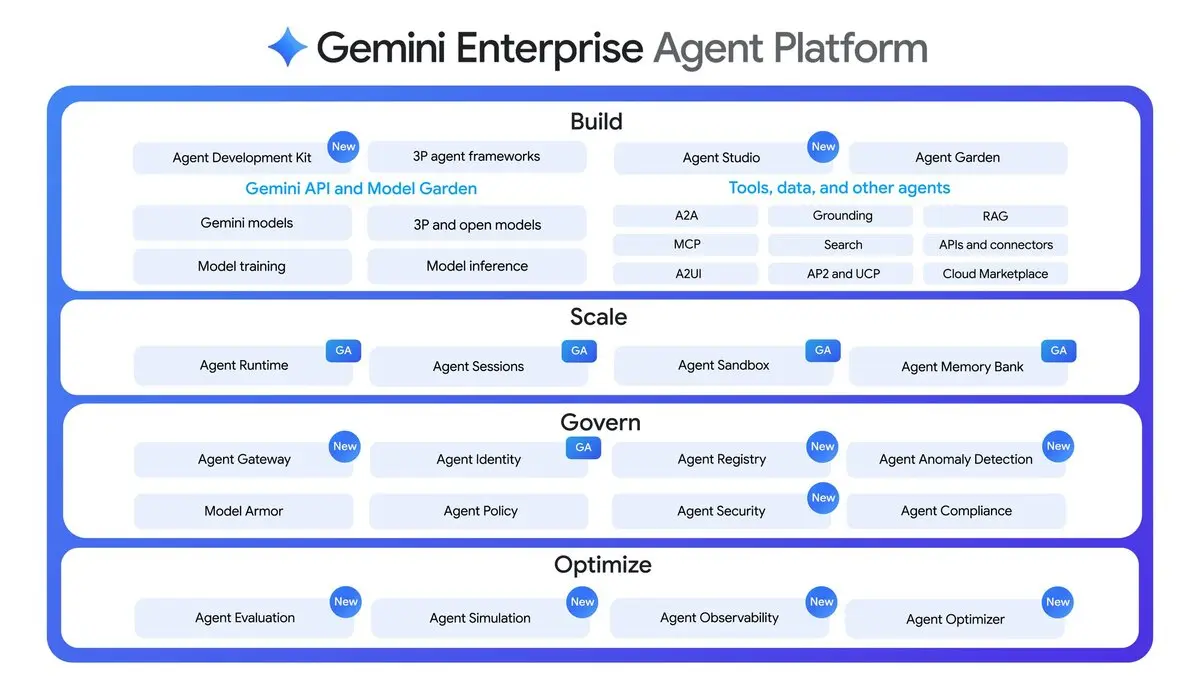
Gemini Enterprise Agent Platform is aimed at technical teams building AI agents that can work across business systems while remaining subject to security and governance controls. It combines model selection, model building and agent development with tools for integration, DevOps, orchestration and oversight.
The platform also gives customers access to more than 200 models through Model Garden. These include Google's Gemini 3.1 Pro, Gemini 3.1 Flash Image, Lyria 3 and Gemma 4, as well as third-party models such as Anthropic's Claude Opus, Sonnet and Haiku.
Platform Shift
The launch reflects a broader industry move from experimental generative AI projects towards more structured deployments of software agents that can complete tasks across multiple systems. Google Cloud is positioning the platform as the successor framework for customers that previously used Vertex AI for model and application development.
Among the main additions is Agent Studio, a low-code interface for building and deploying agents, alongside an upgraded Agent Development Kit for code-first development. The kit already processes more than six trillion tokens each month on Gemini models, according to Google Cloud.
Other features are designed to support agents in production rather than short test runs. A reworked Agent Runtime supports long-running agents that can remain active for days, while Memory Bank is intended to give those agents persistent context over longer periods.
Google Cloud has also added tools for linking agents with enterprise systems. These include native integrations for internal data and software tools, support for batch and event-driven tasks using BigQuery and Pub/Sub, and templates in what it calls Agent Garden for tasks such as financial analysis, invoice processing and code modernisation.
Governance Focus
Security and governance are a central theme of the launch. Google Cloud has introduced Agent Identity, Agent Registry and Agent Gateway as control mechanisms for organisations running multiple agents, including those developed internally and those sourced from partners.
Agent Identity assigns each agent a cryptographic identifier, while Agent Registry acts as a catalogue for approved agents, tools and skills. Agent Gateway is intended to enforce security policies and connect agents and tools across different environments.
The platform also includes monitoring and security tools aimed at identifying abnormal behaviour. These include Agent Anomaly Detection, Agent Threat Detection and an Agent Security dashboard linked to Security Command Centre.
Google Cloud is also emphasising operational monitoring. Agent Simulation, Agent Evaluation and Agent Observability are designed to help customers test agent performance before deployment and inspect live conversations and execution paths once systems are in use.
Customer Use Cases
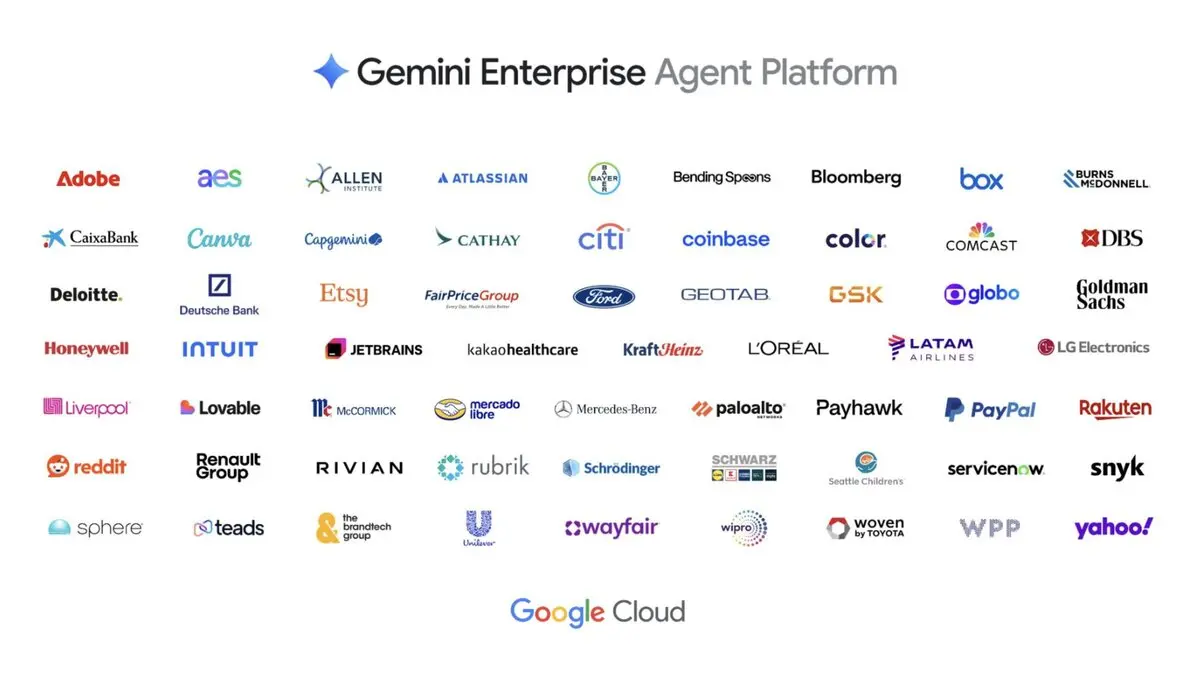
Several companies outlined how they are using the platform in live or emerging deployments across healthcare, telecoms, finance, transport and consumer applications.
At Burns & McDonnell, the platform is being used to build an AI agent based on decades of project data. "Burns & McDonnell uses Agent Platform to transform how organizational knowledge is applied across the enterprise. Using ADK, we are building an AI agent that turns decades of project data into real-time, actionable intelligence. Agent Platform enables this innovation to scale responsibly by combining deterministic business rules with probabilistic reasoning - making AI a trusted operational capability, not just a productivity tool. With Agent Platform, we aren't just managing knowledge; we are activating experience to drive faster, more confident decisions," said Matt Olson, Chief Innovation Officer, Burns & McDonnell.
Colour Health said it is applying the platform to its Virtual Cancer Clinic. "Colour Health uses Agent Platform to power our Virtual Cancer Clinic, delivering end-to-end care. By building our Colour Assistant with the Agent Development Kit (ADK) and scaling it via Agent Runtime, we are helping more women get screened for breast cancer. The Colour Assistant engages users to check screening eligibility, connects them to clinicians, and helps schedule appointments. The power of the agent lies in the scale it enables - helping us reach more people and respond to individual risk and eligibility in real time," said Jayodita Sanghvi, Head of AI Platform, Colour.
Comcast said it has rebuilt Xfinity Assistant using the Agent Development Kit. "By rebuilding Comcast's Xfinity Assistant with Agent Development Kit (ADK), we've moved beyond simple scripted automation to conversational generative intelligence that delivers personalized troubleshooting and self-service support to our customers. Agent Runtime has been a massive accelerator, allowing us to deploy a sophisticated multi-agent architecture that increases digital containment while ensuring secure, grounded interactions via Gemini. We aren't just reducing repeat interactions by solving customers' issues the first time; we're redefining the customer experience at scale," said Rick Rioboli, Chief Technical Officer, Connectivity & Platforms, Comcast.
Other users cited include Geotab, Gurunavi, L'Oréal, Payhawk and PayPal. Their examples ranged from restaurant discovery and internal AI programmes to expense handling and agent-based payment workflows.
PayPal described the platform's role in production deployment and payment-related workflows. "PayPal uses Agent Platform to rapidly build and deploy agents in production. Specifically, we use Agent Development Kit (ADK) and visual tools to inspect agent interactions, and manage multi-agent workflows. This provides the step-by-step visibility we need to visualize the flow of intent and payment mandates. Finally, Agent Payment Protocol (AP2) on Agent Platform provides the critical foundation for trusted agent payments, helping our ecosystem accelerate the shipping of secure agent-based commerce experiences," said Nitin Sharma, Principal Engineer, AI, PayPal.