

Ireland holds steady as Europe's FDI projects fall
Mon, 25th May 2026.webp)
Ireland held steady at 75 foreign direct investment projects in 2025, while an EY survey ranked the country 10th in Europe for investor attractiveness in 2026.
The figures suggest Ireland is resisting a broader slowdown across the continent, where inbound foreign direct investment fell 7% year on year to 5,023 projects, the lowest level in a decade.
Ireland ranked 15th in Europe by total project count, up two places from the previous year, and 10th on a per-capita basis. More than half of all inbound projects came from the United States, which accounted for 53% of the total, well above the European average of 19% for US-backed projects.
Investment activity was not confined to Dublin. The survey found 41% of projects were located outside the capital, with 23% in the South West.
Sector mix
Software and IT services was Ireland's largest foreign investment sector, with 33 projects recorded during the year. That was double the 2024 level and represented more than 40% of all projects secured.
Business services followed with 14 projects, while financial services accounted for nine. Research and development also stood out, making up 25% of Irish investments, compared with a European average of 7%.
The findings suggest investors continue to associate Ireland with technology, innovation and research-led activity. Ireland also rated strongly as a location for artificial intelligence investment, innovation and deployment.
At the same time, respondents identified several risks to the country's future appeal. Infrastructure was the main concern, rising from sixth place in the previous survey, while energy, labour and other operating costs were also cited as constraints.
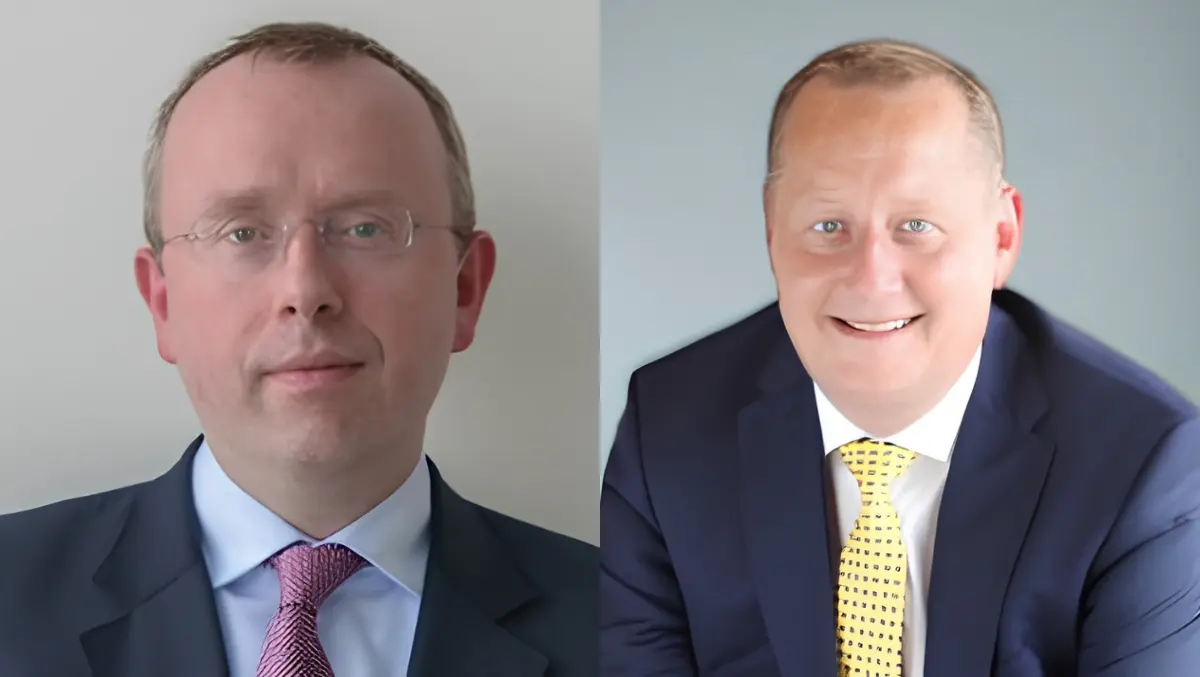
Feargal de Freine, EY Ireland Partner and Head of FDI, said Ireland's performance had come against a difficult backdrop for Europe.
"In what was another challenging year for FDI in Europe, holding our own is a strong outcome for Ireland as is the continued strength of investor sentiment towards Ireland. Our performances in software and R&D in particular highlight our enduring advantage in these fields, while Ireland was also rated highly as a location for AI investment, innovation and deployment. However, the broader European trend points towards a structural shift in global FDI investment that has been underway for several years now, as countries utilise industrial policy to aggressively court investment. Events over the past 12 to 18 months have accelerated this agenda, and businesses and policymakers are seeking to navigate disruption across a range of fields simultaneously, including geopolitical risk, economic shock and technological disruption," de Freine said.
Regional picture
The regional distribution of projects was one of the more notable features of the Irish data. Dublin remained central to the country's foreign investment profile, but activity continued across other parts of the state, supported by clusters in life sciences, medtech, advanced manufacturing and technology.
Ronan Murray, EY Cork Office Managing Partner, said the spread of projects beyond the capital remained encouraging.
"The regional spread of FDI across Ireland continues to be a positive story with two in five projects in 2025 located outside the capital and regional clusters of expertise in areas like life sciences, medtech, advanced manufacturing and technology. While Dublin continues to play a key role, we're seeing investment reach communities right across the country, from cities to towns and regional hubs, with the south-west in particular having a very strong year with almost one in four projects in 2025 located here. Looking ahead, maintaining that momentum will depend on continued investment in infrastructure, skills and regional development, so every part of the country can continue to benefit from future FDI," Murray said.
European decline
Across Europe, the survey pointed to a more difficult environment for attracting overseas investment. Total projects were 22% below the 2019 pre-pandemic level of 6,412, underlining a sustained weakening in recent years.
France remained the largest destination for foreign direct investment despite a 17% decline in projects. The UK saw a 14% fall and Germany recorded a 10% drop.
Some markets moved against that trend. Poland posted a 10% increase in foreign investment projects, Spain rose 7% and Turkey climbed 20%. At the regional level, Greater Lisbon and Catalonia also recorded gains.
US investment into Europe was stable in 2025, although still 38% below its 2019 peak. Germany's role as a source of investment into other European countries also weakened sharply, with a 28% decline.
Some sectors expanded despite the overall downturn. Defence-related projects rose 84% and were linked to almost 7,000 new jobs, with the strongest activity in the UK, France and Ukraine. Low-carbon energy projects increased by 25%.
By contrast, several industrial sectors came under pressure. Healthcare manufacturing projects fell 28%, chemicals dropped 19% and automotive investment declined 11% as companies faced higher production costs, elevated energy prices and tougher international competition.
Despite the weaker headline numbers, more than half of business leaders surveyed said they still planned to establish or expand operations in Europe over the coming year. The report put that figure at 54%, down from 59% in 2025 and 72% in 2024, but still above the levels recorded in 2022 and 2021.