

G+D expands card issuance tools to lift activation
Tue, 26th May 2026.webp)
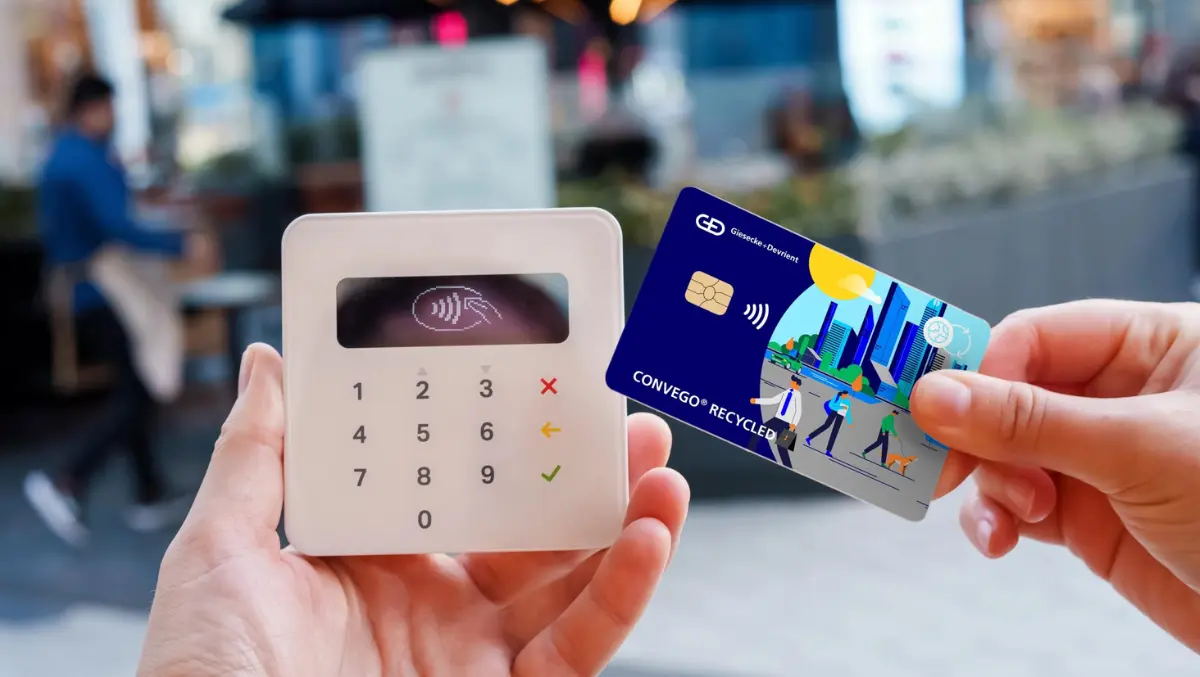
Giesecke+Devrient has expanded its Convego card issuance range with address validation, smart packaging and kiosk pickup tools, targeting the gap between card delivery and activation.
The new products focus on points where payment card issuance can break down before a customer makes a first transaction, including incorrect delivery addresses, postal delays, packaging that does not prompt action and cases where customers want to avoid mail delivery altogether.
The launch comes as card issuers continue to face weak activation rates despite large numbers of cards in circulation. In the United States alone, there are more than 648 million credit card accounts, according to the Federal Reserve Bank of New York, as cited by Giesecke+Devrient.
Address checks
One part of the update is an AI-assisted address validation tool called Convego validAIgent. It checks address data before shipment, identifies addresses likely to be undeliverable and synchronises corrections across customer relationship management and card personalisation systems.
Giesecke+Devrient said thousands of payment cards are returned in the mail each month. Between 10% and 20% of returned mail is caused by incorrect addresses entered by cardholders, while 60% to 75% involves undeliverable addresses, it said.
For cards that have already been returned, the tool can contact cardholders through in-app messages, confirm a new address and trigger a new round of personalisation and delivery. The system also includes CASS-certified validation for the US market, address correction suggestions and analytics on address quality across an issuer's portfolio.
The focus on address data reflects one of the earliest operational risks in physical card issuance. If the card does not arrive, activation cannot happen, and the issuer may face extra costs for replacement, fulfilment and customer support.
Smart package
Another addition, Convego Smart Package, places a low-energy Bluetooth tag in the card packaging. When the package comes close to the recipient's mobile device, it can trigger a notification by text message or through a banking app to confirm arrival and prompt the customer to activate the card.
According to Giesecke+Devrient, the tag works with both iOS and Android devices, uses a unique identifier and is designed for extended battery life. The product is intended to turn the arrival of a physical card into a clearer customer touchpoint, rather than leaving activation to a leaflet inside an envelope.
The approach addresses a familiar issue for banks and card issuers. Physical delivery often ends with little more than a posted envelope and standard instructions, leaving customers to notice the card, open the package and decide what to do next without any immediate prompt.
Kiosk pickup
The third product, Convego QuickCard, offers self-service collection from kiosks as an alternative to postal delivery. After approval, a cardholder receives an authorisation code, chooses a kiosk location, authenticates and collects the card.
The system can be used for both newly approved cards and emergency replacements. It is aimed at customers who do not want to wait for the post, are hard to reach through conventional delivery channels or live in places where postal infrastructure is less reliable.
For issuers, kiosk collection removes packaging and shipping steps from the process. It also shortens the time between approval and receipt, which may reduce the delay before a card is used for the first time.
Wider platform
The new tools sit within its Convego Service Market, which covers inventory management, card design, fulfilment and customer communications. Banks and fintech groups can deploy the products individually or combine them with existing issuance workflows, according to Giesecke+Devrient.
The expansion is part of a wider push by suppliers to improve what happens after a card is approved but before it is used. While digital wallets have changed some payment habits, physical cards remain central to consumer banking and still depend on fulfilment systems, logistics and customer onboarding steps that can fail in ordinary ways.
Giesecke+Devrient, headquartered in Munich, has more than 14,500 employees and generated EUR 3.2 billion in turnover in its 2025 fiscal year. It operates across digital security, financial platforms and currency technology through 118 subsidiaries and joint ventures in 41 countries.
Eric Megret-Dorne, Global Head of Issuance Services at G+D, outlined the intent behind the expansion in a statement. "Data and AI make card issuance more efficient and autonomous: Verifying the destination, selecting the right channel, reducing the steps between card receipt and first transaction - without adding complexity for the cardholder or the issuer's operational teams. With concrete, deployable levers we are targeting potential failure points that issuers can solve on their own terms and timeline - as agentic as they want issuance of a card to be," he said.